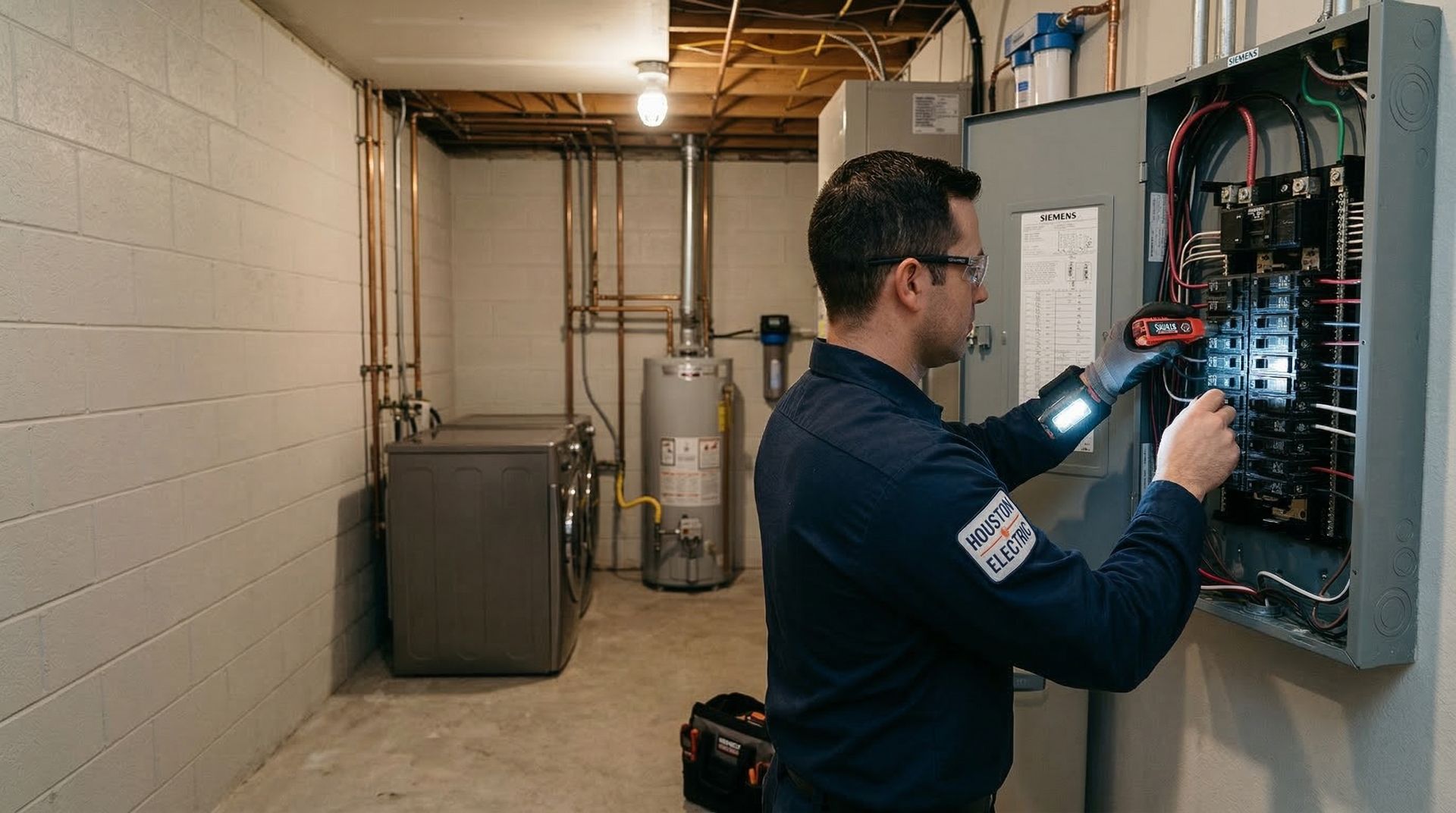
Your home's electrical system is easy to ignore—until it isn't. A flickering light, a burnt smell near an outlet, a breaker that keeps tripping. These aren't just nuisances. In Houston's climate, they're warning shots.
Houston's combination of high humidity, coastal storm seasons, and a large stock of aging homes creates electrical hazards that homeowners in drier climates simply don't face. Moisture accelerates corrosion. Flooding compromises wiring. Decades-old systems weren't designed for today's power demands. And a problem left unaddressed doesn't stay small—it becomes a house fire.
Here are the 7 warning signs that mean it's time to schedule a professional electrical inspection in Houston —and what each one is telling you about your home.
Seeing any of these signs right now?
Don't wait to see if it gets worse. Our licensed Houston electricians are available for same-week inspections—including post-storm assessments.
Schedule Your InspectionThe "Big Three": Signs That Need Immediate Attention
These three issues don't get a "let's watch it for a while" response. If you're experiencing any of these, call a licensed electrician today.
Burning Smells from Outlets or Switches
An acrid, "fishy," or burnt plastic odor near an outlet, switch, or electrical panel isn't a quirk—it's a distress signal. These smells indicate melting wire insulation, an overheated circuit, or electrical arcing. All three are active fire risks. Turn off the circuit, don't use the outlet, and call an electrician.
Flickering or Dimming Lights
Lights that briefly dip when your HVAC kicks on? Normal. Lights that flicker persistently, dim unpredictably, or flicker across multiple rooms? That's a different problem. Persistent flickering points to loose wiring connections, an overloaded circuit, or a failing service drop—the line connecting your home to the grid.
Breakers That Keep Tripping
A breaker tripping once after running too many appliances makes sense. A breaker that trips repeatedly on the same circuit—even without heavy loads—is telling you something is wrong. Persistent tripping usually means an overloaded circuit, a short in the wiring, or a breaker that's failing and needs replacement.
💡 Pro Tip: The Smell Test
Walk your home once a month and take a sniff near outlets, the electrical panel, and any frequently used switches. Catching a burning smell early—before visible damage or a fire—can save your home and your family.
Houston's 4 Unique Electrical Hazards
Beyond the universal warning signs, Houston homeowners face four specific hazards tied to our city's history, geography, and climate. These require an inspector who understands the local landscape—not just the national code.
Aluminum Wiring in Older Homes
If your home was built in Houston between the late 1960s and mid-1970s—neighborhoods like Sharpstown, Memorial, and Spring Branch are common—there's a real chance it has aluminum wiring. Aluminum expands and contracts more than copper with temperature changes, causing connections to loosen over time. Loose connections mean heat buildup. Heat buildup means fire risk. An inspection can identify aluminum wiring and recommend the right remediation.
Humidity-Driven Corrosion
Houston's humidity is relentless. Over time, it accelerates oxidation on wiring terminals, circuit breakers, outdoor grounding rods, and panel bus bars. Corroded metal creates electrical resistance—and resistance creates heat. This is the slow, invisible hazard that catches homeowners off guard because nothing looks wrong until something goes very wrong.
Flood Damage That Isn't Obvious
Houston floods. When water enters a home—even just a few inches—it compromises wiring insulation and accelerates corrosion inside walls, under floors, and in electrical boxes. The danger here is that the damage is often invisible. A home that "dried out fine" may still have compromised wiring behind the drywall. Any flooding event, however minor, warrants a professional post-flood electrical inspection before considering the home fully cleared.
Outdated or Damaged Grounding
Homes built before 1980 often lack proper grounding entirely—meaning a power surge has nowhere safe to go except through your appliances or, worse, a person. Add Houston's expansive clay soil to the mix: as it shifts with seasonal moisture changes, it can damage underground grounding connections. Proper grounding isn't optional; it's what stands between a surge event and a catastrophic failure.
51,000+
home electrical fires reported annually in the U.S.
— U.S. Fire Administration | Most are preventable with routine inspections
When to Schedule Your Houston Electrical Inspection
Beyond the warning signs, some situations call for a proactive inspection even when nothing seems obviously wrong:
Schedule an inspection if any of these apply:
Buying or Selling in Houston?
A dedicated electrical inspection catches what general home inspectors miss—and protects you from surprises that can stall or kill a deal.
Get a Pre-Sale Inspection QuoteDon't Wait for a Problem to Become a Crisis
The difference between a minor electrical issue and a house fire is often just time. The warning signs in this post are your home's way of asking for attention. The good news: caught early, almost every electrical issue is fixable without drama or enormous expense.
A professional electrical inspection in Houston gives you a complete picture of your home's current state—and a prioritized list of what needs attention now versus what can wait. It's the most cost-effective thing you can do to protect your home, your appliances, and your family.
⚠️ If You're Experiencing Warning Signs Right Now
For burning smells, sparking outlets, or breakers that won't reset: turn off the circuit at the panel and don't use the outlet until a licensed electrician has inspected it. Electrical fires can develop inside walls for hours before becoming visible.
Ready to Know Your Home Is Safe?
Houston's licensed electrical inspection experts. Compliant with current NEC standards.
We serve all Houston neighborhoods—same-week appointments available.
Schedule Your Inspection TodayNo obligation · Upfront pricing · NEC-compliant inspections